Tortilla Mexican Grill
Industry: Hospitality
Verdict: “A national chain with local energy that stops at the restaurant door.”
Reviewed: April 2026
Who They Are
Tortilla Mexican Grill is the UK’s leading California-style Mexican fast-casual chain. Founded in 2007 and listed on AIM as MEX, the brand operates 62 locations across high streets, railway stations, airports and delivery kitchens. The proposition is simple and effective: customisable burritos, bowls, tacos and nachos, built in front of you, with the tagline “Fast Filling Fresh.” Under new UK CEO Mac Plumpton, formerly Managing Director at Leon, Tortilla has been pushing into health-conscious territory with its Fuel-Good Bowls and Protein Pots range. The Burrito Society loyalty programme offers member pricing, exclusive rewards and event access to regulars.
What We Noticed
The energy gap between counter and screen
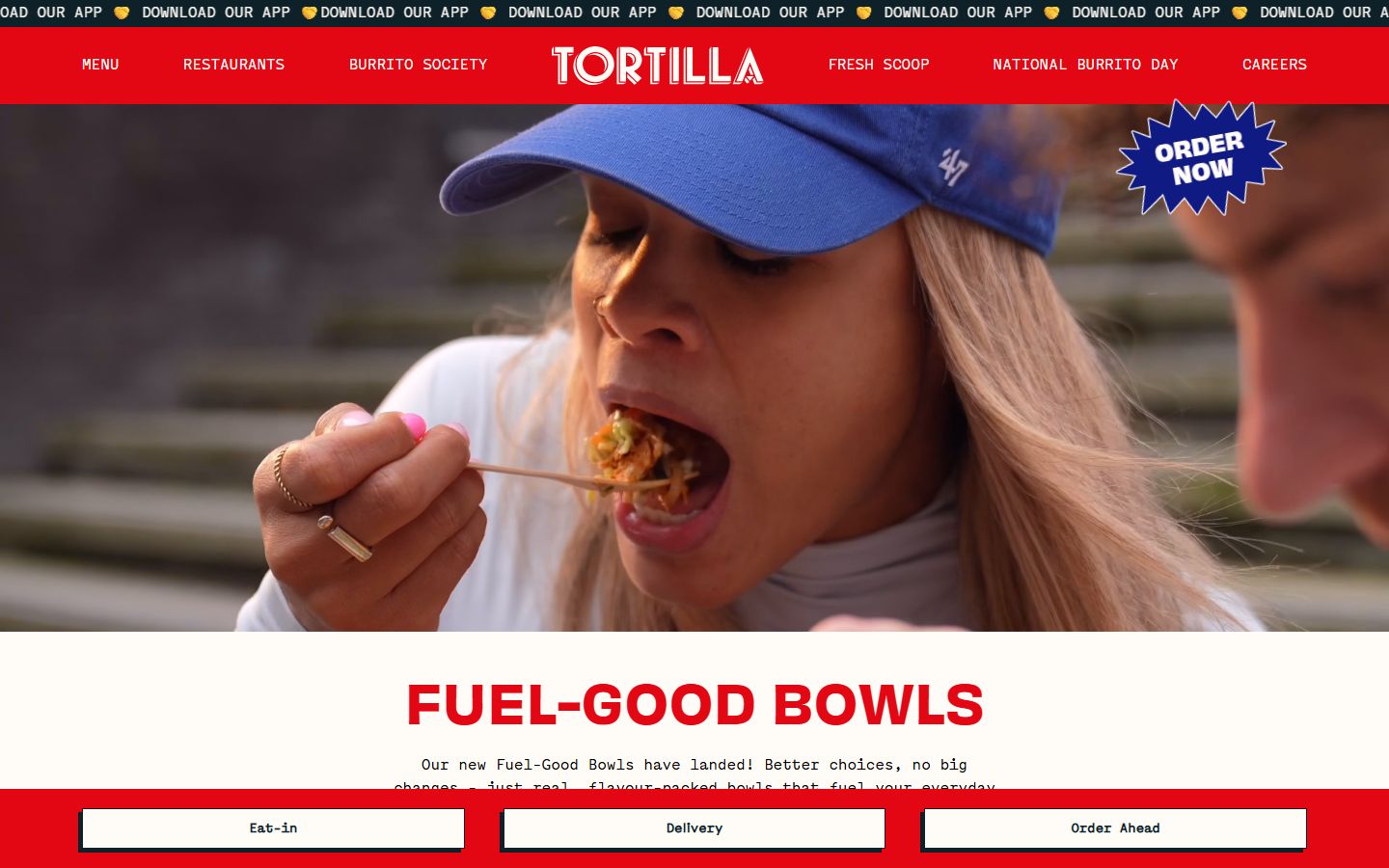
Walk into a Tortilla and you get bold colours, staff calling out orders, food built in front of you. The experience is loud, confident and unapologetically fun. The website is none of those things. It is a functional ordering tool. Menu grid, location finder, occasional promotion. The “Fast Filling Fresh” personality that works so well in person simply does not translate online. This is a common pattern in fast-casual dining, where the digital presence is treated as an operations layer rather than a brand channel. For a PLC with 62 locations and a young, mobile-first audience, the gap between in-store personality and online experience is worth paying attention to.
A loyalty programme that hides in plain sight
The Burrito Society is one of the more interesting loyalty plays in UK fast-casual. Member pricing, exclusive events, rewards. It goes beyond the standard “collect ten stamps” model. Yet on the website, the programme is buried. It sits beneath the menu, beneath the promotions, beneath the location pages. For a brand competing with Barburrito, Chipotle UK and Chilango for repeat custom, the loyalty programme should be doing heavy lifting on the homepage. Instead, it reads as an afterthought. The brand has built something genuinely differentiated and then made it difficult to find.
Student copy that sells price, not brand
Tortilla runs a “Student Monday” promotion with five-pound burritos and the headline “Broke already?” It works as a tactical offer. But the copy sells on price alone, which positions the brand as cheap rather than clever. Students are a valuable audience for fast-casual, particularly near transport hubs and universities. The opportunity is to make students feel like insiders, not bargain hunters. The Burrito Society could be the vehicle for this, tying student offers to membership rather than standalone discounts.
Content as a missed channel
The blog section on the Tortilla website features a single post. The newsletter signup is a third-party iframe, disconnected from the brand experience. For a chain with 62 locations, seasonal menu rotations and a health-conscious product line, there is significant content territory going unoccupied. Behind-the-counter stories, ingredient sourcing, regional specials, none of it exists online. The brand has material to work with. It simply has not invested in the channel.
What Works
Tortilla gets several things right. The core proposition is clear and well-executed. “Fast Filling Fresh” is a strong three-word platform that communicates speed, generosity and quality without overcomplicating the message. The Fuel-Good Bowls range shows a brand that reads its market well, responding to health-conscious demand without abandoning its identity as a burrito-first operation. The multi-format approach, spanning high street, transport hub, delivery kitchen and eat-in, demonstrates operational flexibility that most competitors at this scale cannot match. The PLC listing adds a layer of credibility and accountability that smaller rivals lack. And the visual identity itself, Tortilla Red against warm cream, is distinctive and ownable. The brand knows what it is. The question is whether the digital experience knows it too.
The Wider Pattern
Across the hospitality brands we have reviewed, a pattern keeps surfacing: the digital experience lags behind the physical one. This is not a technology problem. It is a priorities problem. Brands invest in fit-out, staff training, menu development and location strategy, then hand the website brief to a team that builds something functional but forgettable.
Tortilla is not alone in this. We see it in Hub Box, a Southwest burger group with deep Cornish provenance and a striking new rebrand from Meor Studio, where the booking widget sits above the food on the homepage. The in-restaurant experience tells a story of 21-day dry-aged beef from Philip Warren butchers and reclaimed-material interiors. The website tells you nothing about either.
The shared lesson for casual dining is that a website is not a menu with a location finder bolted on. It is the first and most frequent brand impression for a growing share of the audience. Brands like House of Gods and Sketch London understand this. They treat digital as a brand channel, not an operations layer. For chains with the scale and ambition of Tortilla, the same thinking applies.
If We Were Starting Fresh
The foundation is already strong. “Fast Filling Fresh” works. The Fuel-Good range works. The Burrito Society has real potential. What is missing is the connective tissue between these assets and the digital experience.
If we were approaching Tortilla’s digital presence with fresh eyes, the direction would be to build a brand platform around the Fuel-Good positioning, making it the lens through which everything online is filtered. Not a rebrand, not a redesign from scratch, but a reframing. The Burrito Society becomes the centre of the digital experience rather than a sidebar. The content layer fills in the stories that the restaurants already tell in person. The student audience gets pulled into the membership ecosystem rather than offered standalone discounts. The homepage leads with personality rather than a menu grid. None of this requires abandoning what works. It requires extending what works into a channel that has been treated as secondary.
Wondering if YOUR brand has the same gaps?
We will tell you -- for free. Our team will analyse your website and brand, then send you an honest review.
Get Your Brand ReviewFeature Your Review
Display this badge on your website to showcase your independent brand review.