With Nothing Underneath
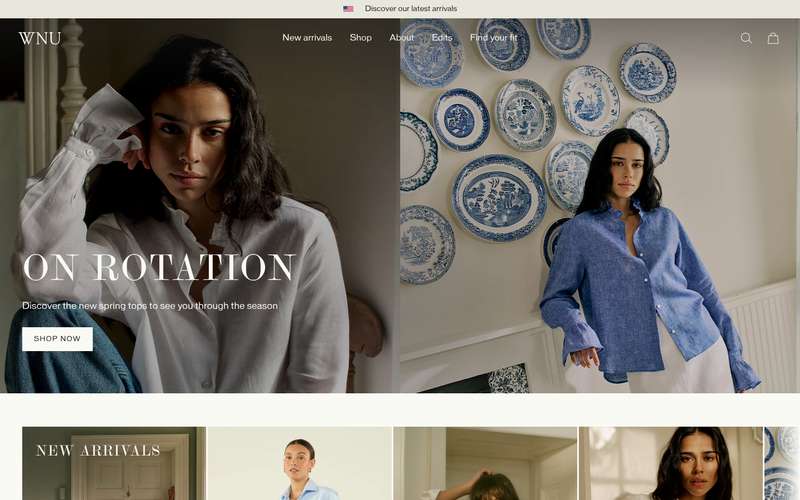
Screenshot of With Nothing Underneath’s website, captured April 2026
With Nothing Underneath
Industry: Fashion / DTC
Verdict: “A brand built on one perfect product, presented through a website that could sell anything.”
Reviewed: April 2026
Who They Are
With Nothing Underneath was founded by Pip Durell with a deceptively simple proposition: make the perfect shirt. Built on responsibly sourced linen and hemp, the brand has grown from a single product obsession into a full wardrobe of essentials, while never losing the identity that started it. The tagline — “Shirts to live in” — captures both the product and the philosophy. WNU has built one of the most engaged communities in British fashion through pop-up shops, physical retail, and a brand voice that manages to feel effortless without being vague. The customer base does not just buy shirts. They tell other people about shirts.
What We Noticed
A visual identity that serves the product, not the brand
WNU’s photography is consistently beautiful. Natural light, relaxed styling, models who look like they genuinely enjoy wearing the clothes. The aesthetic is effortless in the way the brand intends. But zoom out from any individual image and a question emerges: could this photography belong to another brand? The visual language — warm neutrals, minimal backgrounds, unhurried poses — is the shared dialect of every premium DTC fashion brand launched since 2018. Sezane uses it. The Frankie Shop uses it. Reformation uses a louder version of it. WNU’s product is distinctive. Its visual identity is not. A first-time visitor arriving at the homepage without seeing the logo would struggle to identify which brand they had landed on.
The founder is the brand’s invisible asset
Pip Durell’s story — leaving a career to make the shirt she could not find — is the kind of founding narrative that anchors a brand in something real. It gives the product purpose beyond aesthetics. It gives the community a person to connect with. But on the website, the founder is largely invisible. There is no prominent homepage presence, no regular editorial voice, no “from Pip” content that lets the community hear directly from the person who started it. The brand benefits from Durell’s presence on social media and at events, but the website does not carry that energy. The digital storefront feels like a curated shop. The brand, at its best, feels like a conversation.
Community energy that stops at the screen
WNU’s physical events and pop-ups generate genuine excitement. The community is not manufactured — these are customers who actively seek out the brand in person, who bring friends, who queue for new drops. That energy is one of the most valuable things the brand owns. And it is almost entirely absent from the website. There is no community content, no event coverage, no user-generated styling features, no “WNU world” that lets online visitors feel what in-person visitors feel. The newsletter signup exists but lacks a compelling proposition beyond a discount. The website converts existing fans efficiently. It does not transmit the thing that makes fans in the first place.
A tech stack ahead of the content it serves
Under the surface, WNU has invested seriously in digital infrastructure. Google Tag Manager, Hotjar, ContentSquare, Klaviyo, Visually.io for personalisation, Global-e for international commerce. This is a brand that understands data-driven optimisation. The gap is not technical capability — it is content. The analytics tools are tracking behaviour on pages that do not have enough brand depth to differentiate the experience. The personalisation engine is optimising a journey that feels generic. The technology is ready for a brand experience that has not yet been built.
What Works
The product itself is the strongest asset. “The perfect shirt” is a positioning statement that is both specific and aspirational. It gives every customer a clear reason to buy and a simple story to tell others. In a fashion market flooded with brands trying to be everything, WNU’s singular focus is genuinely distinctive.
The fabric story — responsibly sourced linen and hemp — is substantive, not performative. These are materials with natural properties (breathability, durability, reduced water consumption) that align with the brand’s aesthetic and its values simultaneously. The sustainability is built into the product rather than bolted onto the marketing.
The physical retail presence deserves particular mention. The pop-ups and stores are not afterthoughts — they are the purest expression of the brand. The tactile experience of feeling the linen, seeing the colours in person, being surrounded by other people who care about the same thing — this is where WNU is at its best. The challenge is translating that feeling to a screen.
The Wider Pattern
Across the brands we have reviewed, community-driven DTC brands consistently face the same structural tension: the thing that builds the community (events, personal connection, founder energy) is not the thing the website prioritises (conversion, product grids, promotional mechanics). Grind built its audience through cultural collaborations and environmental innovation but greets visitors with discount codes. P.Louise has 3 million TikTok followers and a world record in live shopping but runs a Shopify template that could belong to any cosmetics brand. WNU has one of the most authentic communities in British fashion, and its website is a polished product catalogue.
The pattern is clear: brands invest in community through social and physical channels, then revert to transactional logic on their owned digital property. The ones that break this pattern — that make the website feel like the community, not just the shop — are the ones that sustain premium pricing without relying on promotional mechanics.
If We Were Starting Fresh
The website would be rebuilt around the concept of “The Shirt Edit” — an editorial-first experience where the product lives inside the brand’s world rather than sitting in a grid. Pip Durell’s voice would be present throughout, not as a formal “About” page but as a recurring perspective: on fabrics, on styling, on the decisions behind each new piece.
The community would be visible from the homepage. Not as testimonials or review widgets, but as content: styling from real customers, coverage of events, the energy of a pop-up translated into imagery and video. The fabric story — linen, hemp, responsible sourcing — would be given the editorial depth it deserves, positioned as a genuine point of difference rather than a bullet point in the footer.
WNU has the rare advantage of a brand that people already love. The website does not need to create that love. It needs to reflect it.
Wondering if YOUR brand has the same gaps?
We will tell you -- for free. Our team will analyse your website and brand, then send you an honest review.
Get Your Brand ReviewFeature Your Review
Display this badge on your website to showcase your independent brand review.