EthicalKind
Industry: Wellness
Verdict: “The only brand using Organic Peace Silk — and the website treats it as a product spec rather than a story.”
Reviewed: April 2026
Who They Are
EthicalKind is a luxury sustainable sleepwear brand built around a single material innovation: 100% Organic Peace Silk. Unlike conventional silk production, which kills the silkworm during harvesting, Peace Silk allows the moth to complete its natural lifecycle before the cocoon is collected. EthicalKind appears to be the only brand in the UK market that has made this material the foundation of its entire range — silk pillowcases, sleepwear, eye masks and accessories, all produced from Organic Peace Silk. The brand competes with Ettitude, Slip and Lilysilk, all of which sell silk sleep products at premium price points. None of them use Peace Silk. That makes EthicalKind’s material story not just a differentiator but a category position that no current competitor can replicate without fundamentally changing their supply chain.
What We Noticed
The Specification Treatment
EthicalKind’s competitive advantage is a material with a story. Organic Peace Silk is not a thread count or a weave pattern — it is an ethical choice about the relationship between luxury and the natural world. The silkworm lives. The silk is harvested differently. The process is slower, more expensive and fundamentally more humane. This is the kind of story that turns a product into a brand and a purchase into a statement. Yet on the website, Peace Silk receives the same treatment as any other product attribute. It appears in descriptions alongside fibre composition, care instructions and sizing information. It is mentioned, explained briefly, and then the page moves on to the add-to-cart button. The single most compelling thing about EthicalKind — the reason it exists, the thing that no competitor does — is formatted as a bullet point.
The Undifferentiated Luxury
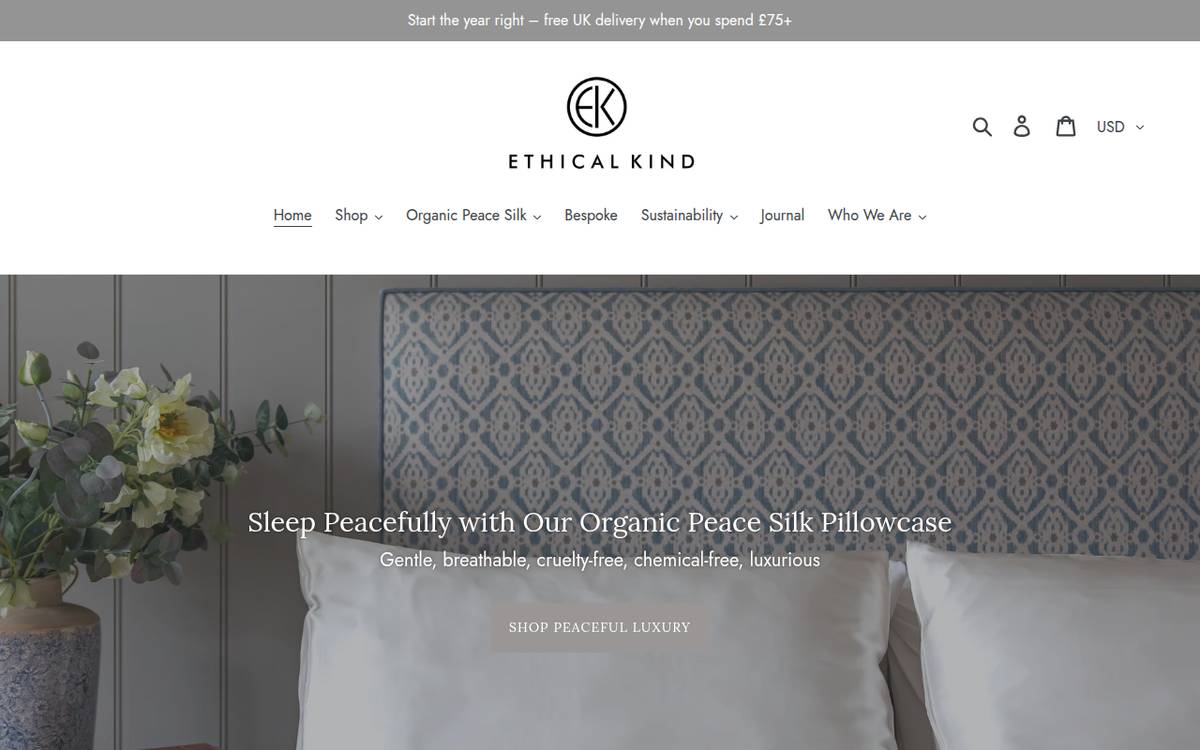
The website’s visual language and tone communicate “luxury sleepwear brand” competently. The photography is clean, the colour palette is appropriate, the layout is functional. The problem is that it communicates the same luxury sleepwear positioning that Slip, Ettitude and Lilysilk all communicate. Remove the logo from the top of the page and a first-time visitor would struggle to identify what makes EthicalKind categorically different from its competitors. The Peace Silk story — the one thing that does make it categorically different — is present but insufficiently prominent. It does not shape the visual language, the navigation structure or the editorial voice. The brand looks like a member of the silk sleepwear category rather than the founder of a new position within it.
The Missing Supply Chain Narrative
Peace Silk production is inherently more complex, more expensive and more deliberate than conventional silk. The sourcing, the waiting for the silkworm lifecycle to complete, the organic certification process, the relationship with the producers — every stage of this supply chain is a piece of content that builds the brand’s authority and justifies its premium pricing. Customers spending over fifty pounds on a pillowcase are not comparing thread counts. They are buying into a story about what their money supports. EthicalKind has that story. It is not telling it. The supply chain is invisible on the website, which means the premium pricing lacks the narrative foundation that luxury brands need to sustain customer loyalty beyond the first purchase.
What Works
The product proposition is clear and defensible. Organic Peace Silk is a genuine material innovation with a compelling ethical story, and EthicalKind has built its entire range around it rather than treating it as one option among many. The brand name itself communicates the ethical positioning directly — “EthicalKind” leaves no ambiguity about the brand’s values. The product range is focused rather than sprawling, which suggests a brand that understands its lane and resists the temptation to extend into categories where the Peace Silk story does not naturally apply. The sustainability messaging is genuine rather than performative — this is not a brand adding a recycled-packaging badge to conventional products. The peace silk certification provides a verifiable claim that customers can investigate independently, which builds trust in a market where greenwashing has made consumers sceptical of sustainability claims. The sleepwear category positioning is strategically sound — luxury sleep is a growing segment, and the intersection of ethical production and premium comfort is underserved.
The Wider Pattern
We see a version of this challenge across DTC brands that have a genuinely unique product story but present it through generic category design. The website looks like it belongs to the category (silk sleepwear) rather than defining a new position within it. Grind, the coffee brand we reviewed, has a similar dynamic — compostable pods that genuinely solve the environmental objection to coffee capsules, presented through a homepage that leads with discount codes rather than the innovation story. Lush has the most radical ethical position in mainstream beauty, buried under seasonal promotions and collaborations.
The pattern is this: brands with genuine differentiation default to category conventions in their digital presentation. They build websites that look like their competitors because the templates, platforms and design conventions of the category are easier to adopt than to challenge. But the brands that sustain premium pricing and build lasting loyalty are the ones that make their differentiation impossible to miss. Dr. Bronner’s puts its manifesto on the bottle. Patagonia leads with activism. Aesop builds its entire retail experience around its philosophy. EthicalKind has a differentiation story as powerful as any of these. It just needs to make it the centre of the experience rather than a line in the product description.
If We Were Starting Fresh
We would build the entire digital experience around the Peace Silk story. Not as an “about us” section or a sustainability page but as the organising principle of every page, every product listing and every piece of content. A visitor arriving at the website should understand within five seconds that this brand does something no other silk brand does, and they should understand why it matters before they see a single product.
The supply chain would become visible. The sourcing journey, the silkworm lifecycle, the organic certification process, the relationship with producers — every stage would be documented, photographed and presented as content that justifies the premium and builds emotional investment. This is editorial luxury branding: the kind of depth that makes a customer feel they are buying into a philosophy rather than a product specification.
The product pages would lead with the Peace Silk story, not the price. “This pillowcase is made from silk that was never taken from a living creature” is a more powerful opening than any thread count or fibre composition. The visual language would be distinct from the silk sleepwear category — warmer, more textural, more connected to the natural world than the cool, minimalist aesthetic that Slip and Ettitude use. EthicalKind is not trying to be the most luxurious silk brand. It is trying to be the most ethical one. The design should reflect that distinction in every element.
Wondering if YOUR brand has the same gaps?
We will tell you -- for free. Our team will analyse your website and brand, then send you an honest review.
Get Your Brand ReviewFeature Your Review
Display this badge on your website to showcase your independent brand review.