The Simple Folk
Industry: Retail & DTC
Verdict: “A slow living brand moving at e-commerce speed.”
Reviewed: April 2026
Who They Are
The Simple Folk makes GOTS-certified organic clothing for women, babies and children. The brand is built around a slow living philosophy — an intentional rejection of fast fashion’s pace, waste and disposability. Collections are minimal in palette and design, favouring natural tones, simple silhouettes and fabrics that soften with wear rather than deteriorate. The brand partners with Suzy Amis Cameron’s “Inside Out” initiative, which promotes sustainable fashion from the inside out. A Journal section on the site publishes editorial content that reinforces the slow living ethos — seasonal reflections, family life, the philosophy behind the garments. The community around The Simple Folk is unusually loyal, drawn to the brand not just for what it makes but for what it represents.
What We Noticed
Philosophy as backdrop, not foundation
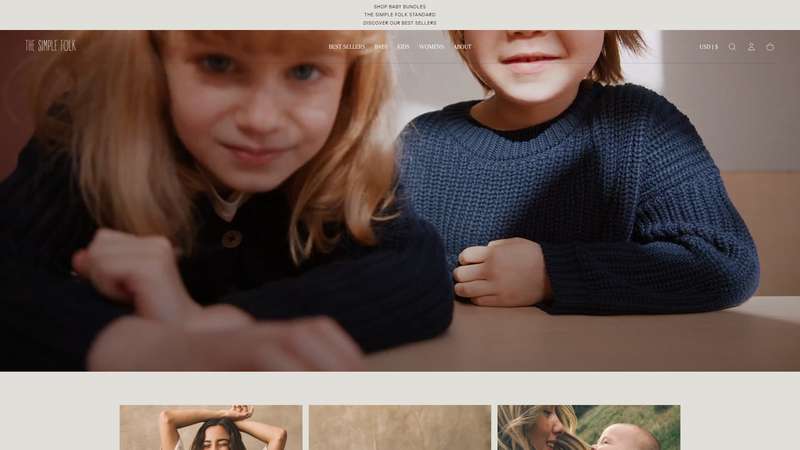
The Simple Folk’s “Beyond the Garment” positioning is distinctive. It says the brand is about more than clothing — it is about a way of living. This is rare in the children’s wear space, where most competitors position around fabric certifications, aesthetic trends or price points. But on the website, this philosophy operates as context rather than structure. The homepage opens with product carousels and seasonal drops — the same tempo as any fast-fashion brand that happens to use organic cotton. The slow living philosophy is present in the copy, but the experience itself does not feel slow. It feels like a shop.
The Journal that deserves the homepage
The Simple Folk’s Journal content is genuinely good. It is not branded content disguised as editorial — it is thoughtful writing about family, seasons, intentionality and the slow living values the brand was built on. This is the kind of content that builds community loyalty and distinguishes a brand from its competitors at a level that product photography alone cannot reach. But the Journal sits behind a navigation link. It is a section you visit if you already know it exists. For a brand whose community was built on shared values rather than shared purchases, the editorial content should be the centrepiece of the digital experience, not a sidebar.
A premium partnership without a stage
The Inside Out initiative, founded by Suzy Amis Cameron, promotes sustainable fashion through education and advocacy. A partnership with an initiative of that profile — attached to a name of that visibility — is a credibility asset that most sustainable fashion brands would feature prominently. On The Simple Folk’s site, the partnership exists but does not occupy the prominent position its significance warrants. For parents and consumers who are actively evaluating which brands are genuinely committed to sustainability versus which are performing it, third-party partnerships of this calibre are the strongest possible signal.
What Works
The visual identity is exceptional. The Simple Folk has achieved something difficult — a visual language that feels premium without feeling corporate, minimal without feeling empty, natural without feeling unfinished. The photography, the colour palette, the typography — everything coheres around a single aesthetic sensibility. This consistency across the entire site is the kind of brand discipline that cannot be faked.
The GOTS certification is a credible sustainability credential. Unlike vague “sustainable” claims, GOTS covers the entire textile supply chain from harvesting raw materials through manufacturing, labelling and distribution. It is externally audited and internationally recognised.
The Journal content, when you find it, is the brand’s hidden weapon. It is authentic, well-written and tonally consistent with the slow living positioning. The readers who engage with it are likely the brand’s most committed customers — the ones who buy because they believe, not because they browsed.
The community loyalty is evident in how customers talk about the brand. This is not transactional loyalty driven by discounts or points — it is values-based loyalty, which is far more durable and far harder for competitors to displace.
The Wider Pattern
The tension between brand philosophy and e-commerce mechanics is one we see across the retail and DTC brands we review. Grind built its identity on environmental innovation but led with discount codes. Pigeon Organics holds the UK’s highest organic certification but buries it below a product grid. The Simple Folk has built a genuine slow living community but serves them a fast-commerce homepage.
The underlying cause is usually structural rather than intentional. Shopify and similar platforms are designed to sell products efficiently. They default to product grids, seasonal drops and conversion-optimised layouts. Building an editorial-first experience on a commerce platform requires deliberate architectural choices that resist the platform’s defaults. Most brands — even those with strong philosophies — follow the path of least resistance and end up looking like every other store on the same platform.
If We Were Starting Fresh
We would rebuild the homepage around the community and the philosophy, not the catalogue. The Journal would move from a navigation link to the centrepiece of the landing experience — the first thing visitors encounter would be the slow living world The Simple Folk has built, not the latest seasonal drop.
Product pages would incorporate family portraits and real-life context alongside standard product photography. The garments are designed to be lived in, and the imagery should reflect that — not just studio shots on white backgrounds but the clothes in kitchens, gardens, on floors, being handed between siblings.
The Inside Out partnership with Suzy Amis Cameron would occupy a prominent position on the homepage and throughout the brand narrative. It is independent validation of the brand’s sustainability commitment from a globally recognised advocate. That is not supporting information — it is a trust signal that should be immediately visible.
Community-led storytelling would become a structural feature, not an occasional Journal entry. Customer families sharing their slow living practices. Seasonal rituals. The ways the clothes age and soften and move between children. The Simple Folk has already built the community. The digital experience just needs to give that community a stage that matches its loyalty.
Wondering if YOUR brand has the same gaps?
We will tell you -- for free. Our team will analyse your website and brand, then send you an honest review.
Get Your Brand ReviewFeature Your Review
Display this badge on your website to showcase your independent brand review.