Yard Sale Pizza
Industry: Hospitality
Verdict: “A pizza brand born at a backyard party that still has the party energy — and a website that cannot quite decide if it delivers.”
Reviewed: April 2026
Who They Are
Yard Sale Pizza began at a backyard party in Clapton, east London. The founders started making stone-baked pizza for friends, the friends told other friends, and a brand was born from a garden. The name is literal — a yard sale, a gathering in a yard, the informal energy of people eating good pizza in an unlikely setting. Today, Yard Sale operates multiple locations across London, each carrying the same neighbourhood spirit: unpretentious, personality-forward, and built on the belief that pizza should be fun. The visual identity is immediately recognisable — a pink and green palette that feels like a party invitation rather than a restaurant branding exercise. Delivery is a significant part of the business, alongside dine-in and takeaway. The brand competes in a London pizza market that includes Pizza Pilgrims, Franco Manca, and Homeslice, and holds its own through personality rather than positioning.
What We Noticed
A delivery brand that does not say so clearly
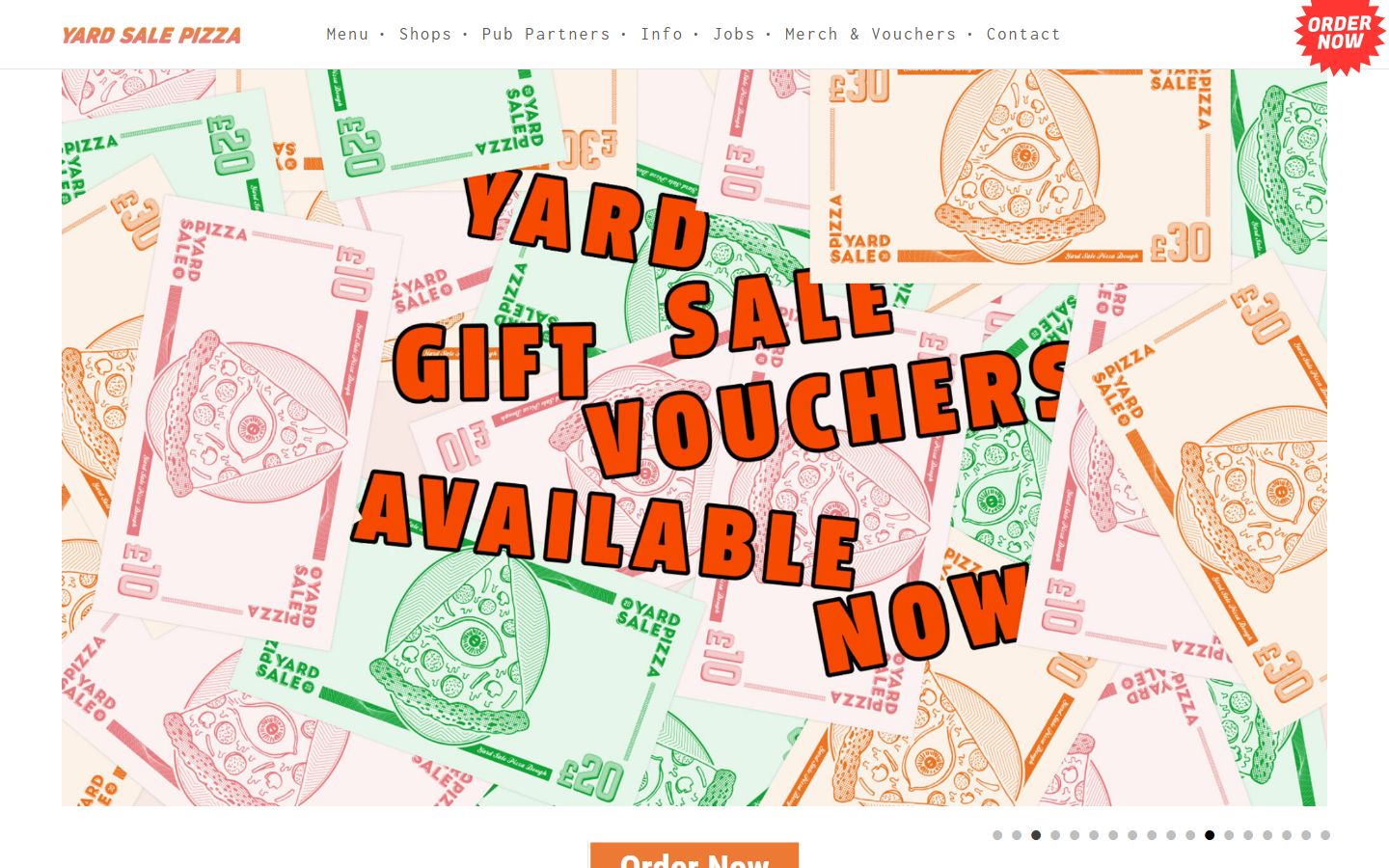
A significant portion of Yard Sale’s revenue comes through delivery — London pizza and delivery are inseparable. But the website does not make the delivery path immediately clear. A hungry visitor arriving at the homepage has to navigate between brand content, location information, and ordering options without an obvious fast lane to “I want pizza delivered to my door now.” This is not a design failure — the site has personality, and that personality is part of the appeal. But personality and functionality need to coexist. The visitor who wants to order has different needs from the visitor who wants to discover a new restaurant, and the site serves both with the same navigation. The result is a moment of friction where there should be a moment of clarity: yes, we deliver. Here is how. Now, what would you like?
Backyard origin, thin backstory
The name tells you something happened in a yard. The vibe tells you it was probably a party. But the website does not fill in the details. Who started making pizza? Why? What was the backyard like? How did a party become a restaurant? Pizza Pilgrims has built an entire brand narrative around a van trip to Naples — a pilgrimage story that gives every location a founding myth. Franco Manca ties everything back to slow-rising sourdough from Brixton Market. Yard Sale has an origin story that is equally distinctive — a backyard party in Clapton that grew into a London pizza brand — but the website treats it as a name rather than a narrative. The story is in the brand’s DNA. It is not yet on the brand’s website.
Party energy in static presentation
The pink and green palette, the playful typography, the brand illustrations — Yard Sale’s visual identity captures the energy of its origins. It feels like a brand that does not take itself too seriously, that would rather make you smile than impress you. This energy is genuinely distinctive in a pizza market where competitors lean toward artisanal earnestness (Franco Manca) or street food cool (Pizza Pilgrims). But the website presents this energy in a relatively static format. The playfulness is in the colour choices and the type, not in the interaction design or the content. A brand with party energy should have a website that feels alive — dynamic, surprising, maybe a little chaotic in the best possible way. Currently, the party aesthetic sits on top of a conventional page structure.
What Works
The pink and green visual identity is one of the most distinctive in London’s food scene. In a category where most brands default to Italian flag colours, Naples photography, or industrial-chic minimalism, Yard Sale’s palette is immediately recognisable and impossible to confuse with anything else. The colours alone communicate personality, informality, and a refusal to conform to category expectations. This is strong brand work.
The neighbourhood model — multiple locations across London, each embedded in its local area — gives Yard Sale the community connection that delivery-only brands cannot achieve. When your local Yard Sale is a five-minute walk away, it becomes part of your neighbourhood in a way that a delivery app listing never can. The brand is present on the street, which builds familiarity, loyalty, and word of mouth.
The creative approach to toppings keeps the menu interesting without losing the stone-baked foundation. Yard Sale is not trying to reinvent pizza. It is trying to make pizza that surprises you — seasonal specials, unexpected combinations, the kind of menu that rewards repeat visits because there is always something new alongside the classics.
The Wider Pattern
Across the brands we have reviewed, structural navigation problems appear most often when a brand serves two distinct customer needs through a single digital experience. Bleach London splits between salon bookings and product shopping without fully serving either. Home House presents photography and membership information through the same interface without clearly mapping the journey. Yard Sale serves discovery customers and delivery customers through the same homepage. The underlying issue is the same: a website that tries to be everything to everyone ends up being slightly unclear for each audience. The solution is not separate websites but clearer paths — recognising that different visitors arrive with different intentions and designing the navigation to serve each one without forcing them through the other.
If We Were Starting Fresh
We would resolve the navigation tension first. Two clear paths from the homepage: “I want to eat” (order delivery, find a location, see the menu) and “I want to know” (the backyard story, the locations, the people). Both paths live within the same brand experience, dressed in the same pink and green, but they serve different visitors with different needs.
The backyard origin story would become the brand’s narrative backbone. The Clapton party, the first pizzas, the moment it stopped being a gathering and started being a business — told with the same informality that the brand’s visual identity already expresses. This is not a corporate history. It is a story about friends, food, and a garden in east London. It deserves to be told properly.
The party energy would extend beyond the colour palette into the interaction design. A website that feels alive, that changes with the season, that surprises returning visitors. The brand’s personality is its strongest asset. The digital experience should match its warmth, its humour, and its refusal to be anything other than itself.
Wondering if YOUR brand has the same gaps?
We will tell you -- for free. Our team will analyse your website and brand, then send you an honest review.
Get Your Brand ReviewFeature Your Review
Display this badge on your website to showcase your independent brand review.