Chaiiwala
Industry: Hospitality
Verdict: “Indian street food culture scaled to 80 locations — with a website that leads with a limited-time menu item.”
Reviewed: April 2026
Who They Are
Chaiiwala launched in 2015 with a proposition that felt obvious once someone said it: bring the Indian chaiwala — the street-side tea vendor, one of the most ubiquitous and beloved figures in Indian food culture — to the British high street. Karak chai, dosa, samosa, chaat, and the specific energy of Indian street food, served in a contemporary cafe format accessible to everyone. In under a decade, the brand has grown to over 80 locations across the UK, primarily through franchising. The name itself is a statement of intent: “chaiwala” is not a brand name invented in a workshop. It is a word that means something to hundreds of millions of people. It connects every Chaiiwala cafe to a tradition that predates the company by centuries.
What We Noticed
Promotional calendar as brand identity
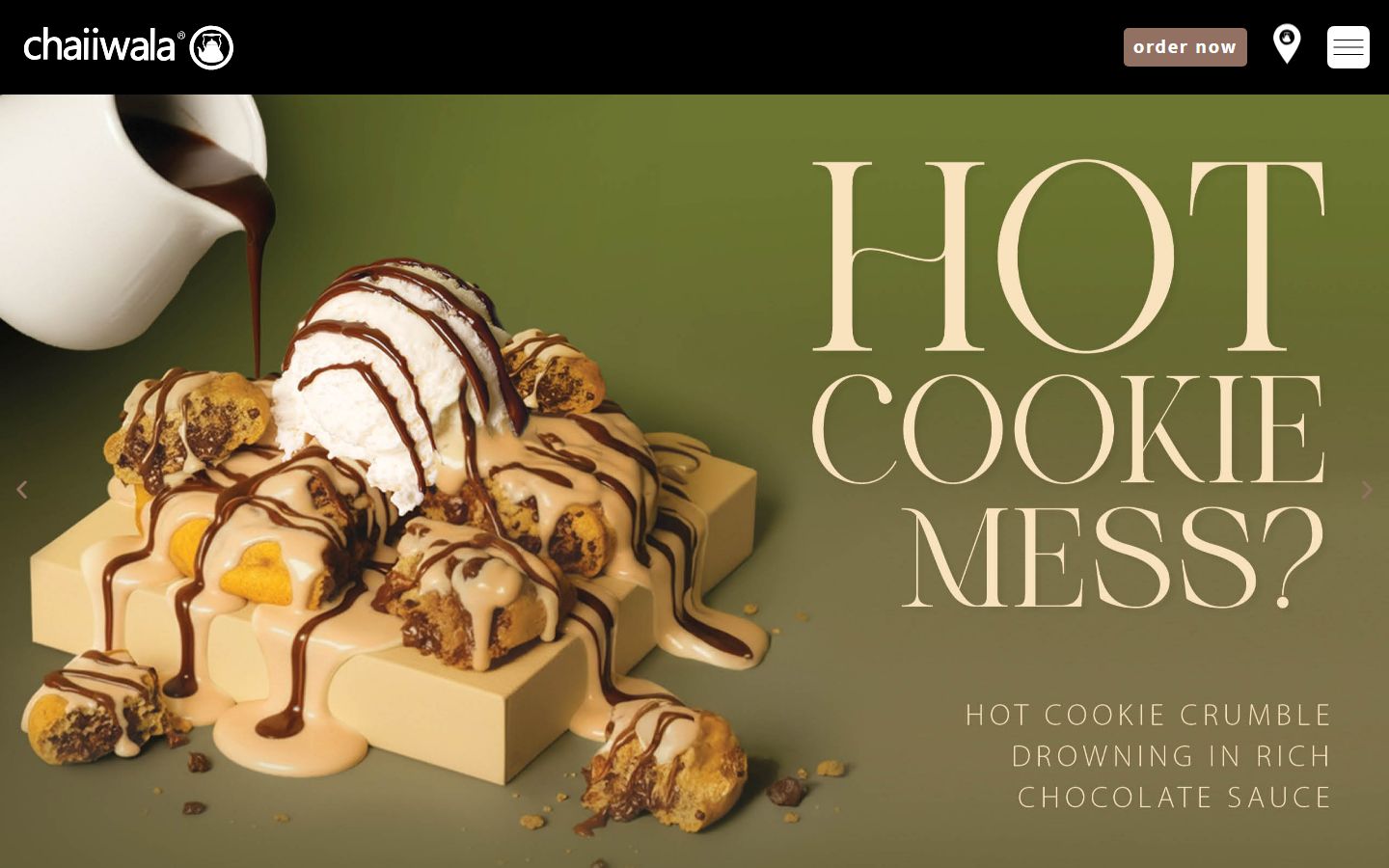
The homepage leads with the current promotion. A limited-time menu item, a seasonal special, a deal of the week. This is the first thing a visitor sees, and it sets the tone for the entire digital experience: Chaiiwala is a place that is running an offer. The promotional mechanics work — they presumably drive footfall and average spend. But they displace the brand’s actual identity. Chaiiwala is importing one of the world’s oldest street food traditions to British high streets. That is a culturally significant proposition. It is a story about food, about migration, about the democratisation of flavour. And it is nowhere on the homepage. The current promotion occupies the space where the cultural story should live.
The chaiwala, unexplained
The brand is named after a person — the chaiwala, a figure so central to Indian daily life that you will find them on virtually every street corner across the subcontinent. The chaiwala is not just a tea vendor. They are a social institution: the place where news is shared, arguments are settled, mornings begin, and evenings wind down. Chai is not just a drink in this context. It is a social ritual. This is the depth behind the brand name. But the website does not explain it. A British customer unfamiliar with Indian street food culture sees a name that sounds exotic and a menu of unfamiliar items. The chaiwala tradition — the cultural weight behind the brand — remains untold. Dishoom built an entire restaurant concept around explaining Irani cafe culture to a British audience. Chaiiwala has an equally rich cultural tradition to draw on and does not yet draw on it.
Street food energy, template delivery
Indian street food is vivid. The colours of turmeric and chilli. The sound of a dosa hitting a hot griddle. The controlled chaos of a market stall during rush hour. This sensory energy is what makes street food culture compelling — it is food as experience, not just as product. The Chaiiwala website is clean, functional, and template-driven. It organises information efficiently. But it does not carry the energy of the food it represents. The gap between the experience of eating at a Chaiiwala cafe — the smell of chai brewing, the sizzle of a dosa, the communal atmosphere — and the experience of browsing the website is wider than it needs to be. The digital experience should make you hungry. Currently, it makes you informed.
What Works
The scale of 80+ locations achieved in under a decade is a genuine proof point. Chaiiwala has demonstrated that Indian street food has mass-market appeal in the UK — this is not a niche proposition limited to areas with large South Asian communities. The brand has found demand across the country, which validates the core insight that chai and dosa belong on the British high street alongside coffee and croissants.
The karak chai itself is a distinctive product. This is not a generic “chai latte” — it is a specific preparation with specific ingredients, distinct from anything Starbucks or Costa offers. In a market where every coffee chain has added a chai latte to its menu, Chaiiwala’s version is the authentic reference point. This product differentiation is real and defensible.
The franchise model has enabled rapid expansion without the capital intensity of company-owned growth. Each franchisee brings local knowledge and entrepreneurial energy. The model has clearly worked — the unit count speaks for itself. And franchisees have chosen Chaiiwala over other food franchise options, which is a market validation signal.
The Wider Pattern
Across the brands we have reviewed, the pattern of conversion displacing culture is most visible in food and drink brands that have scaled quickly. Greene King has 225 years of brewing heritage and leads with discount codes. BrewDog built a cult following on punk identity and now presents itself through product tiles and promotional banners. Chaiiwala has centuries of chaiwala tradition behind it and leads with this week’s limited-time offer. The pattern repeats because promotional mechanics are measurable and heritage storytelling is not. But the brands that sustain premium positioning and cultural relevance — Dishoom being the obvious comparison in Indian hospitality — are the ones that invest in the story as much as the offer.
If We Were Starting Fresh
We would build the digital experience around the chaiwala tradition itself — not as a history lesson, but as a living cultural context for everything on the menu.
The homepage would open with energy: the sights, sounds, and flavours of Indian street food culture, translated into a digital experience that makes you want to eat. The chaiwala would be explained — briefly, visually, warmly — so that every visitor understands they are not just ordering tea. They are participating in a tradition that has been part of daily life across India for centuries.
The menu would be presented with cultural context. A dosa is not just a crepe. A karak chai is not just a tea. Each item carries a story about where it comes from, how it is made, and why it matters. This context does not replace the promotional calendar — it enriches it. A limited-time menu item is more compelling when the customer already understands the culinary tradition it comes from. Eighty locations is not just a number. It is proof that Indian street food culture has arrived on the British high street. The website should celebrate that arrival.
Wondering if YOUR brand has the same gaps?
We will tell you -- for free. Our team will analyse your website and brand, then send you an honest review.
Get Your Brand ReviewFeature Your Review
Display this badge on your website to showcase your independent brand review.