
Forthay Granola
Review dated April 2026, not re-checked since.
Editorial note, 26 October 2026: The date label and wording were updated. This was not a new check of the firm’s website.
Who They Are
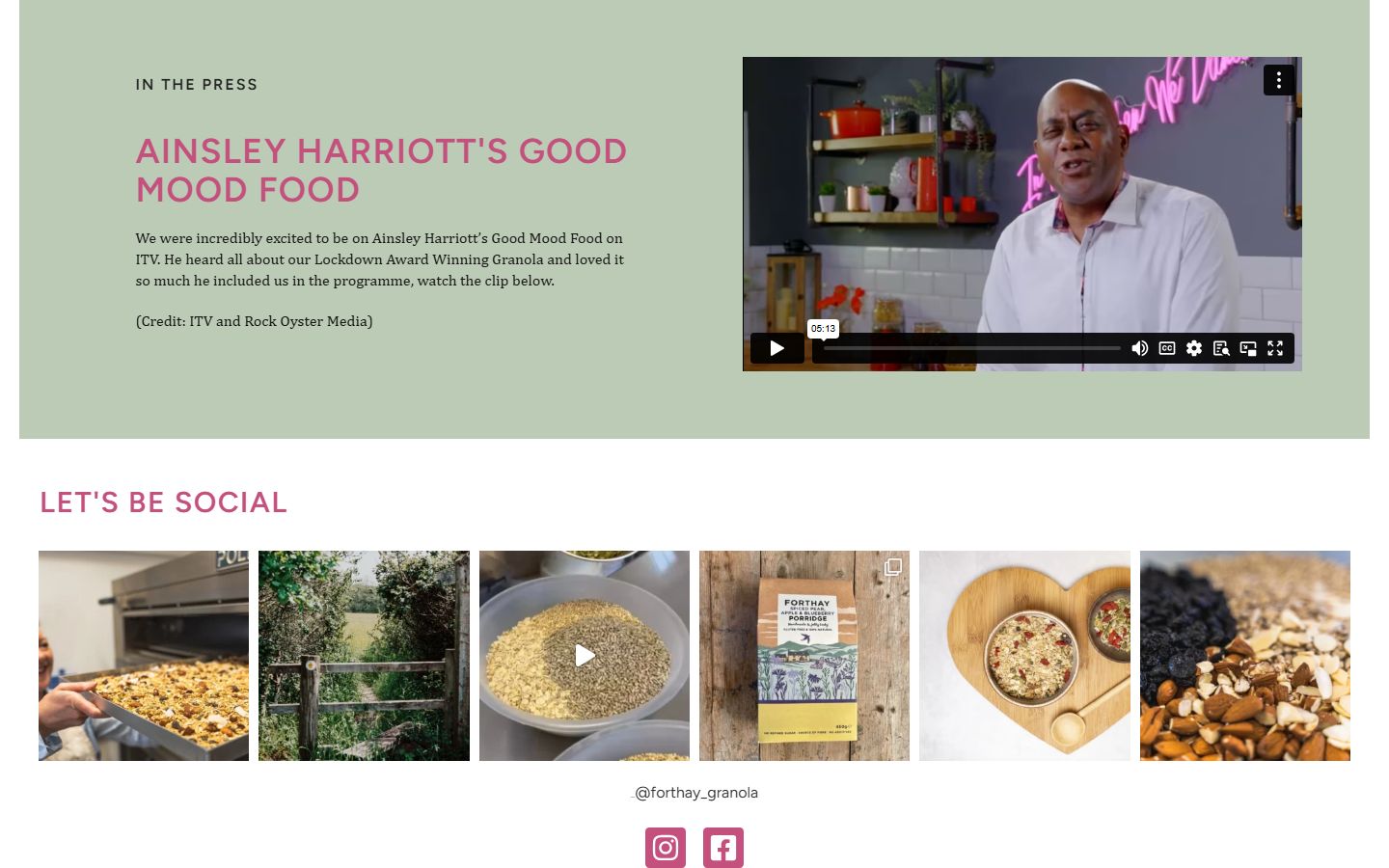
Forthay Granola is a small-batch artisan granola producer with roots in a specific place — the name itself anchors the brand to its origin. The company crafts granola using natural, high-quality ingredients in small batches, giving each product a handmade quality that mass-produced alternatives cannot match. Forthay has built a loyal customer base through farmers’ markets and wholesale relationships, proving the product sells on its own merit. The brand’s distinctive Berry Pink identity stands out on shelf against the earthy browns and greens that dominate competitor packaging.
What MAAD Noticed
The unavailable shopfront recorded by the review
The original review recorded a Shopify error page at forthaygranola.com saying “This store is unavailable.” It did not identify products, a brand story, or a purchase path at that address. The review described this as a stalled migration from WordPress to Shopify. For a premium food brand in 2026, this means being invisible to every consumer who searches for artisan granola, small-batch breakfast products, or premium food gifts online. The product may be exceptional, but the internet does not know it exists.
Product loyalty without discoverability
What makes Forthay’s situation unusual is that the product clearly works. Wholesale relationships are active. Farmers’ market regulars keep coming back. The brand has achieved something most food startups struggle with: repeat purchase driven by product quality rather than marketing spend. But this loyalty lives entirely in physical channels. A customer who buys Forthay at a Saturday market and wants to reorder on Monday had no reorder path identified by the original review. A deli owner who stocks the product and wants to link to the brand from their own site had no working shop address identified by the original review. The product has earned trust; the original review found no direct online route to extend it beyond arm's length.
A visual identity doing heavy lifting
The Berry Pink (#C3507D) brand colour is doing real work. In a category where almost every competitor defaults to natural, earthy tones — kraft browns, leaf greens, oat creams — Forthay’s pink reads as confident and distinctive. On a shelf at a farmers’ market, it stands out immediately. On a deli display, it catches the eye before the label is read. This is a genuine brand asset. But without a digital presence, the visual identity works only in person. It cannot build recognition through Instagram, email, or search. A colour this distinctive deserves to show up where people spend most of their time — which, increasingly, is not at the market on Saturday morning.
What Works
The small-batch production method is an honest differentiator. Forthay does not claim to be artisan while outsourcing to a contract manufacturer. The granola is made by hand, in small quantities, with ingredients the brand has chosen deliberately. This is the kind of product integrity that sustains premium pricing and builds word-of-mouth among food-conscious buyers.
The wholesale traction proves commercial viability. Getting stocked in independent retailers through product-led wholesale relationships means the product is doing the selling. Retailers chose to carry Forthay because their customers wanted it, not because of advertising reach. That is the most reliable signal of product-market fit.
The brand name carries provenance. “Forthay” is specific. It sounds like a place, which it is. In a market crowded with generic food brand names (adjective + ingredient, verb + noun), a place-rooted name connects the product to somewhere real. It implies a story without needing to explain it.
The Wider Pattern
Forthay's situation illustrates a physical-digital gap: strong product, proven demand, and a genuine identity alongside an unavailable online shop recorded by the original review.
If MAAD Were Starting Fresh
MAAD would build a clean Shopify storefront that does three things from day one.
First, tell the provenance story. The Forthay name, the place, the process, the person behind the brand. Small-batch granola is a claim many brands make. Forthay needs to show what it means in practice: the ingredients, the scale, the hands-on method. This is the content that justifies premium pricing to a first-time visitor who has never tasted the product.
Second, make the product buyable online. A direct-to-consumer channel with subscription and gifting options would capture the customers who currently have no way to reorder between market days. Forthay should not cede this ground by absence.
Third, carry the Berry Pink identity into every digital touchpoint. The colour that works on the shelf should work on the screen. A visual identity this distinctive deserves a website that matches — not a generic Shopify theme in the default palette, but a bespoke treatment that carries the same confidence the packaging already has.
The hardest part of building a food brand is making something people want to buy twice. Forthay has done that. What remains is making it findable.
Something wrong? Tell us
Email hello@maad.house with the review address and the point that needs attention. MAAD makes corrections at the existing address with a dated note. A firm can send a reply for publication or ask for same-day takedown.