Grind
Industry: Food & Drink
Verdict: “A mission worth leading with, buried under discount codes.”
Reviewed: March 2026
Who They Are
Grind started as a single espresso bar in Shoreditch in 2011, founded by David Abrahamovitch and Kaz James. Fifteen years later, it is a DTC coffee brand with over 300,000 customers, home-compostable Nespresso-compatible pods, and a chain of London coffee bars that still carry the original east-London sharpness. The brand runs on subscription (up to 25% savings), ethically sourced beans roasted in London, and a quiet environmental programme — the Better Coffee Foundation — that recovered 15,050kg of ocean plastic in 2024 alone. Collaborations with Pokemon, Peanuts, Baileys and Hello Kitty keep Grind culturally visible. The pods are made from plants.
What We Noticed
The discount code is the front door
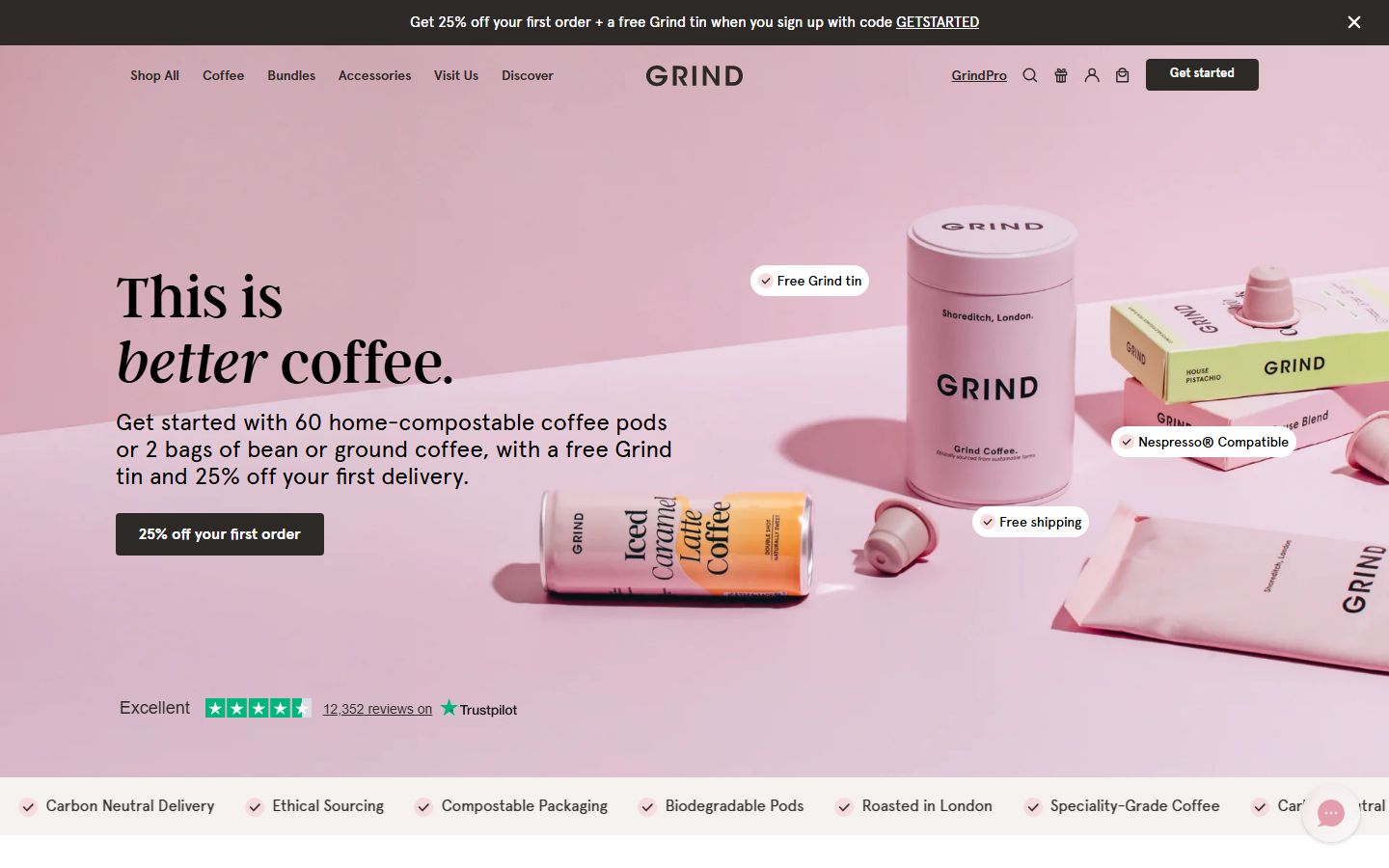
Open grind.co.uk and the first thing you see is a promotion. A percentage off. A code. A countdown. This is a brand that has earned cultural credibility through compostable innovation, a genuine environmental foundation, and collaborations with some of the most recognisable names in popular culture — and it greets you with the same mechanic as every other DTC subscription box. The homepage hero space is valuable real estate. It tells visitors what a brand believes. Right now, Grind believes in conversion.
The mission exists but whispers
The Better Coffee Foundation is doing real, measurable work. 15,050kg of ocean plastic recovered is not a vague pledge or a future target — it is a number with weight behind it. But you have to scroll past product grids and promotional banners to find it. The environmental story is treated as supporting content rather than a reason to buy. For a brand whose core product innovation — compostable pods — directly addresses the biggest environmental objection to coffee pods, this feels like an odd structural choice. The thing that makes Grind genuinely different from Nespresso is several clicks away from the thing Grind shows you first.
The origin story has been archived
Grind’s founding narrative — a Shoreditch espresso bar that became a DTC powerhouse — is the kind of story brands spend millions trying to fabricate. It is real, it is specific, and it is buried deep in the site. The journey from a single bar to 300,000 customers is inherently interesting. It gives the subscription model context and the premium pricing a backstory. But the site treats it as history rather than identity.
Design sophistication without editorial depth
Grind uses Apercu Pro. It has a Creative Director on staff (Natasha Sarkar). The product photography is consistent — 1:1 square shots on neutral grey at 1600x1600px. The visual language says “we care about design.” But the site lacks the editorial layer that brands at this level of visual sophistication tend to have. There are no long-form pieces about sourcing, no deep dives into compostable materials, no founder perspectives. The design says premium; the content says transactional.
What Works
The compostable pod innovation is the real thing. In a market where Nespresso’s aluminium recycling programme still requires customers to return used capsules, Grind’s home-compostable pods solve the problem at source. You use them, you compost them, done. That is a genuinely better product, not just a marketing claim.
The collaboration strategy is smart. Pokemon, Peanuts, Hello Kitty, Baileys — these are not random partnerships. Each one puts Grind in front of a different audience and reinforces the idea that this is a brand with cultural range, not just a coffee subscription. The limited-edition drops create urgency without feeling desperate.
The loyalty programme (Grind Rewards) and subscription model create structural retention. Once a customer is subscribing, the switching cost is real. And the 25% savings tier gives heavy drinkers a genuine reason to commit.
The brand voice, when it appears, is distinctive. East-London sharp, environmentally honest, unapologetically premium. It does not sound like other coffee brands. The problem is not the voice — it is how rarely the site lets it speak.
The Wider Pattern
Across the brands we have reviewed, we keep seeing the same structural tension: brands with earned cultural credibility that default to conversion mechanics on their owned channels. P.Louise, the beauty brand we reviewed alongside Grind, has 3 million TikTok followers and a world record in live shopping — but its website runs on a generic Shopify template that could belong to any DTC cosmetics brand. Grind has compostable innovation, a real environmental foundation, and a Shoreditch origin story — but its homepage leads with discount codes.
The pattern is this: brands that built their audience through story, identity and cultural relevance gradually shift their digital experience toward short-term conversion. The discount code replaces the mission statement. The product grid replaces the narrative. The brand that people fell in love with becomes the brand that offers 20% off your first order.
This is not unique to Grind. It is the default trajectory of successful DTC brands. But the brands that sustain premium pricing and long-term loyalty are the ones that resist it.
If We Were Starting Fresh
We would rebuild the digital experience around the concept of “The Better Cup.” The environmental mission — compostable pods, the Better Coffee Foundation, ethically sourced beans — would become the front door, not the footnote. The homepage would lead with why Grind exists, not what Grind is discounting.
Products would be framed as joining a mission rather than saving money. The subscription would feel like membership in something, not just a pricing mechanic. The origin story — Shoreditch bar to 300,000 customers — would sit at the heart of the brand narrative, giving the premium positioning a foundation that no discount code can provide.
The editorial layer would match the visual sophistication. Long-form content about sourcing, compostable materials, the Foundation’s work, the collaboration process. The kind of depth that justifies premium pricing and gives customers something to believe in beyond the next promotion.
Grind has already done the hard part. The product is genuinely better. The mission is real. The design sensibility is there. The digital experience just needs to catch up with the brand it is supposed to represent.
Want us to review your brand?
We will analyse your visual identity, website, and competitive position, then publish our findings. You get early access 48 hours before it goes live.
[Submit Your Brand for Review → /submit/]
Related Reviews
House of Gods | Sketch London | Tortilla | Hub Box
Reviewed March 2026. Website and brand assets may have changed since this review.
This is an independent review based entirely on publicly available information.
Wondering if YOUR brand has the same gaps?
We will tell you -- for free. Our team will analyse your website and brand, then send you an honest review.
Get Your Brand ReviewFeature Your Review
Display this badge on your website to showcase your independent brand review.