Union Coffee
Industry: Food & Drink
Verdict: “A brand that knows its farmers by name and shows you a product grid instead.”
Reviewed: April 2026
Who They Are
Union Coffee was established by Jeremy Torz and Steven Macatonia with a mission to source exciting, hard-to-find speciality coffee directly from farmers they believe in. The brand roasts in small batches in the UK, building long-term relationships with farming communities across coffee-growing regions worldwide. Their catalogue spans single-origin beans, blends, and a subscription service. “Roast & Ground,” the brand’s own magazine, provides in-depth editorial content about coffee origins, brewing methods, and the people behind the beans. The Shopify store uses a strong tasting notes system that guides customers through flavour profiles.
What We Noticed
The farmers behind the fold
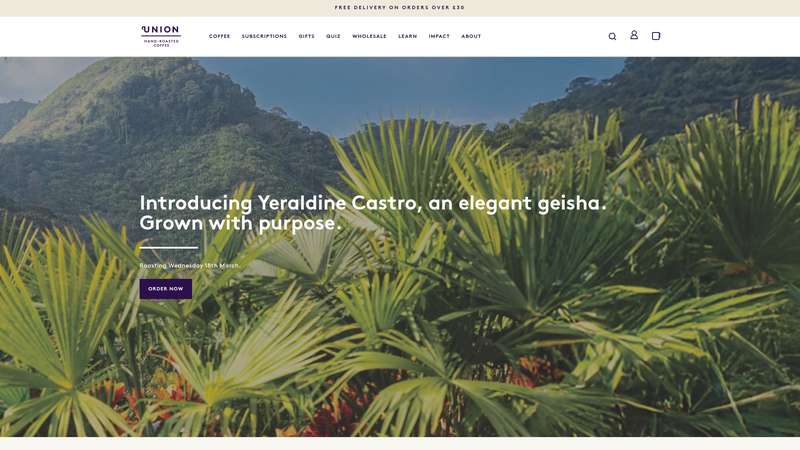
Union Coffee’s founding proposition is direct trade — not as a certification badge, but as a relationship. The founders visit farms. They know the communities. They source beans based on personal knowledge of the growers and their practices. This is a rare claim in speciality coffee, where “direct trade” is frequently used as shorthand for slightly-better-than-average supply chain practices. Union’s version is the real thing. But on the website, the origin stories sit below the product grid. The homepage leads with bags of coffee, not with the people who grew them. A first-time visitor sees a well-designed shop. They do not immediately see the reason this shop exists — which is that every bean arrived through a relationship, not a broker. The brand’s moral authority is its commercial differentiator, and it greets you second rather than first.
A magazine that deserves a bigger stage
“Roast & Ground” is a well-produced editorial publication that covers coffee origins, brewing techniques, and industry knowledge. It is the kind of content that builds authority in speciality coffee — the depth that separates a roaster from a retailer. But on the site, the magazine sits in a secondary position. It reads as a blog rather than as a flagship content channel. For a brand whose entire value proposition is knowledge and relationships, the editorial arm should be inseparable from the shopping experience. Product pages that link to origin stories. Farmer profiles that connect to the beans they grow. The magazine’s content is the bridge between “why should I care about this coffee” and “add to cart.” Currently, the bridge is there but the path to it requires deliberate navigation.
Subscription without ceremony
Union offers a coffee subscription, but the experience lacks the visual distinction and personal touch that would separate it from any other Shopify subscription plugin. The sign-up process is functional. The options are clear. But there is no sense of joining something — no taste profile matching, no discovery journey, no feeling that subscribing to Union is different from subscribing to any other coffee delivery service. For a brand whose identity is built on curation and personal selection, the subscription should feel curated and personal. It currently feels transactional.
What Works
The tasting notes system on the Shopify store is genuinely useful. Each coffee carries clear flavour descriptors, origin information, and roast profile data. For a customer choosing between a Rwandan single-origin and a Brazilian blend, the tasting notes provide the guidance that photographs alone cannot. This is practical design that serves the speciality coffee buyer well.
The “Roast & Ground” magazine demonstrates editorial commitment that most coffee brands do not sustain. Regular, in-depth content about origins, techniques, and industry trends builds the kind of expertise perception that justifies premium pricing. It positions Union as a knowledge authority, not just a product seller.
The direct trade model is the brand’s deepest asset. Long-term farmer relationships, personal visits, and fair practices are not just ethical positioning — they are operational advantages. The beans are harder to find because they come from specific farms. The quality is more consistent because the relationships are ongoing. This is a supply chain advantage that translates into product quality, and it is visible to anyone who reads the detail.
The visual identity is understated and sophisticated. The earthy tones, classic typography, and clean layouts communicate quality without overclaiming. The brand feels considered rather than designed, which aligns well with the direct trade and artisan roasting positioning.
The Wider Pattern
Across the food and drink brands we have reviewed, we see a recurring pattern of brands that lead with products rather than with the reason the products exist. Gail’s Bakery leads with seasonal menus rather than its 130-bakery neighbourhood story. Grind leads with a discount code rather than its ocean plastic foundation. Union Coffee leads with bags of coffee rather than the farming communities that grew them. The products are the output. The story is the input. Brands that invert this — leading with why, then showing what — build the kind of loyalty that product grids alone cannot sustain.
If We Were Starting Fresh
We would make the farmer the first thing a visitor sees.
Not as a stock photo of hands holding coffee cherries. As a named person, from a named farm, in a named region. The kind of specificity that proves the direct trade claim is real. An interactive origin map connecting each coffee to its farming community — with photographs, stories, and the history of the relationship — would make Union’s differentiator visible and tangible. Origin Coffee, a competitor, already does this well. Union’s relationships are deeper but less visible.
The subscription would become a discovery experience. A taste profile quiz at sign-up. A sense of joining a community of people who care about where their coffee comes from. Subscriber-only origin stories. Early access to new arrivals. The functional mechanics of subscription (frequency, quantity, payment) would sit behind a layer of personality and curation.
“Roast & Ground” would be woven into the product experience. Each coffee page would link to the relevant origin story. Each farmer profile would connect to the beans available now. The editorial content would not sit in a separate section but would thread through the shopping experience, so that buying coffee and learning about coffee become the same journey.
The product grid would still exist. But it would not be the front door.
Wondering if YOUR brand has the same gaps?
We will tell you -- for free. Our team will analyse your website and brand, then send you an honest review.
Get Your Brand ReviewFeature Your Review
Display this badge on your website to showcase your independent brand review.